
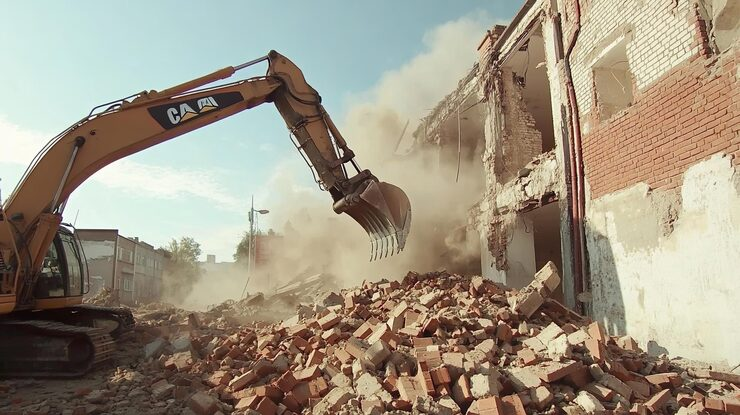
It seems like it would be simple to pull down a building, rip it down and get rid of the rest. The fact is, however, that the process is far more difficult. This blog post, which was created for Semper Drilling, tells you how to find out how much demolition waste you have. We’ll cover everything you need to know to get a reasonable estimate, such as what constitutes demolition debris and how to use equations, tools, and density charts.
Understanding Demolition Debris
Demolition debris is the trash left after a building or structure is partially or totally torn down. Demolition debris is not like regular trash since it is huge, heavy, and usually made up of more than one material, such as:
- Bricks, blocks, cement, and mortar are all kinds of concrete and masonry.
- Wood for frame, flooring, and trim
- Some examples of metals are copper wire, steel beams, and aluminium siding.
- Plaster and drywall
- Roofing materials include shingles, tar, asphalt, and insulation.
- Glass and ceramics
- Asbestos, lead paint, and certain glues are examples of hazardous waste.
The weight and volume of debris may be pretty diverse from project to project since it is made up of various materials. For example, tearing down a little wood-framed home leaves behind much less rubbish than tearing down a parking garage made of reinforced concrete.
The first thing your concrete contractors in Los Angeles, CA, need to know is how much garbage you must deal with, and look at what’s in it.
Why You Should Calculate Demolition Waste
Being able to quantify demolition trash precisely isn’t just a “nice-to-have”; it’s necessary. This is why:
Budgeting
The charges for landfills, transportation services, dumpster rentals, and drill rental in Los Angeles are generally determined by weight or volume. Your budget might go higher for no reason if you overestimate. If you don’t plan, you could have to make costly alterations during the project.
Logistics
You can figure out how many cars, containers, and people you need by knowing how much garbage there is and how heavy it is. This prevents complications from occurring during the demolition.
Following the Rules
A lot of localities want exact estimates of how much debris will be left behind in project permit applications. Some also want to know how materials break down, so it’s crucial to understand how they do that.
Sustainability Goals
One of the most important goals is sorting and recycling materials as green construction methods grow more widely. Calculations help discover pieces that may be reused.
Step-by-Step Guide to Calculating Demolition Debris
Calculating debris is the first step in saving money, following the rules, and being more efficient. Let’s go into the complex math now. This is a well-organised set of steps.
Step 1: Measure the Structure
To calculate how much trash there will be, you need to know how big the structure being knocked down is. You will need to measure (or receive from blueprints). We use these measurements to determine how much rubbish there is in terms of weight and volume.
Step 2: Identify Material Types
Next, split the structure into groupings of materials. A typical residence could have:
- 60% wood (for the roof, floors, and structure)
- 20% concrete or masonry (for the driveway and foundation)
- 15% drywall and insulation
- 5% metals, plastics, and other items
The ratios in commercial or industrial projects vary greatly in favour of glass, steel, and concrete.
This separation of materials is significant since each has its own density and disposal demands.
Step 3: Use Material Density and Weight Tables
To determine how much a material weighs, use standard charts showing how to convert volume into weight. These are some approximate statistics that people commonly use while tearing down buildings. Accurate tables are handy since they make sure you’re not just guessing.
Step 4: Apply the Debris Calculation Formula
This formula is a typical approach to figure out how much garbage there is:
Weight of trash = (Volume of material × Density of material)
Do this for each section, such as the roof, walls, floors, and so forth, and then put them all together.
Step 5: Add a Waste Factor
It is not always appropriate to tear down. This buffer makes sure that your dumpster has adequate space and that you have the hauling capability to handle real-life scenarios.
Tools and Resources for Accurate Estimation
It’s beneficial to do math by hand, but digital tools and resources could speed things up:
- Debris Estimation Calculators: Waste management companies provide online tools that enable you to rapidly figure out how much debris there will be, depending on the type, size, and materials of the building.
- Blueprint Takeoff Software: Programmes like PlanSwift and Bluebeam can look at building designs and figure out the necessary dimensions and number of materials.
- Mobile Apps: Field crews may use tools that work on the fly to input numbers at the demolition site and obtain quick calculations.
Disposal and Recycling Considerations
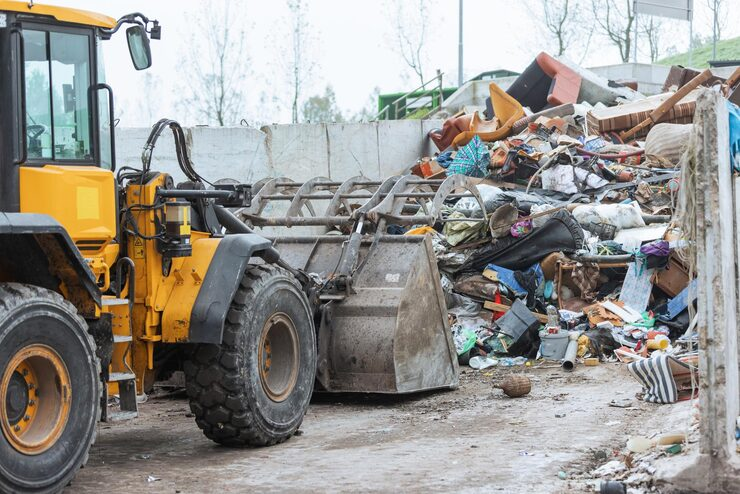
The next stage is to figure out what to do with the demolition debris once you know how much there is. Putting everything in a landfill is old-fashioned, expensive, and against the law in most places. Take these considerations into account:
Throwing Away at a Landfill
When you dump items out in the old-fashioned manner, you must pay by weight or volume at a landfill. We still need this for certain things that can’t be recycled or are toxic, but utilising it too much might cause costs to go up.
Options for Recycling
A lot of the material that is thrown away during demolition may be recycled:
- You may break up concrete and use it as aggregate in new constructions.
- Some metals worth a lot of scrap include steel, copper, and aluminium.
- You can make mulch, compost, or biomass energy from wood.
- You may make new gypsum items out of drywall.
Recycling helps meet objectives for sustainability, costs less, and has less of an impact on the environment.
You don’t have to get rid of everything. You may often give away and preserve things like doors, cabinets, appliances, and fixtures to nonprofits like Habitat for Humanity. You could earn a tax benefit for this.
You may save money and help make buildings more eco-friendly by recycling, reusing, and disposing of items in the proper manner.
Conclusion
At Semper Drilling, we recognise how crucial it is to plan demolition projects well. You must count waste correctly so things operate smoothly, expenses stay low, and outcomes last. No matter whether you’re pulling down a little home or a major factory, taking the time to figure out how much trash you have may make your task run more efficiently from start to finish.
