
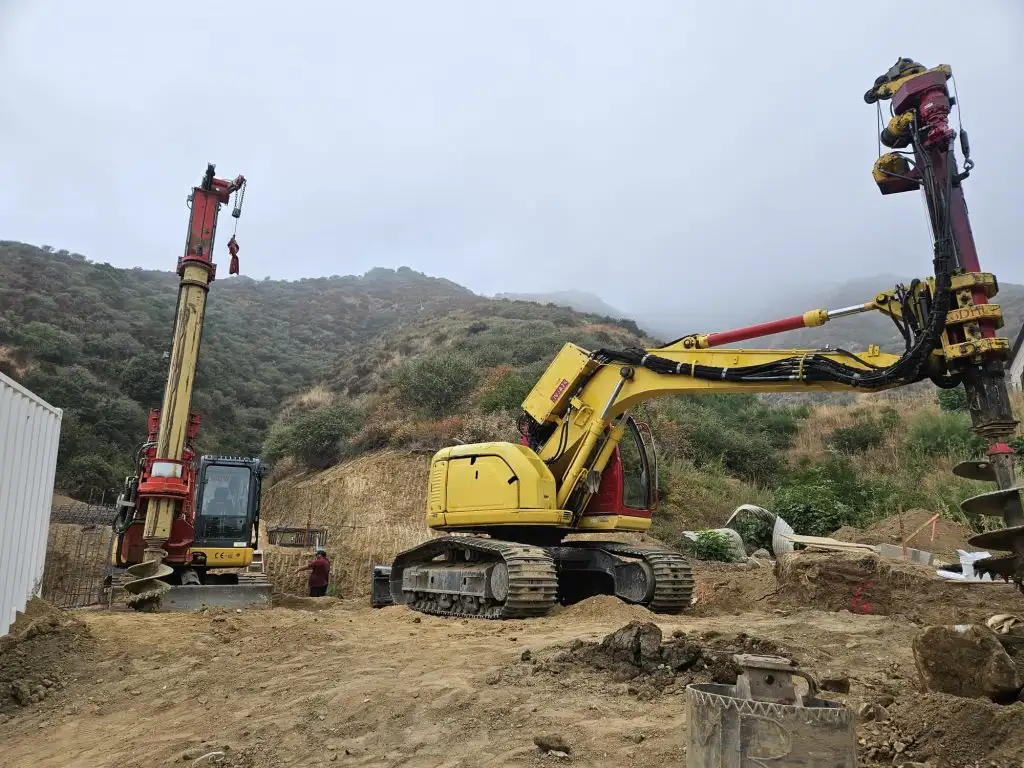
A drilling contractor is the specialized crew or individual that turns foundation plans into ground-level reality, providing rigs, trained operators, and safety oversight for the holes, shafts, and bores that a structure depends on. If you have searched for “What is a drilling contractor?” the short answer is fieldwork, not office review.
This guide focuses on construction drilling rather than oil, mining, or water-well work, since those fields use different equipment and licensing altogether.
Los Angeles adds its own complexities to that baseline definition, and they matter more than most homeowners expect. Hillside lots, restricted access, and older structures sitting close to the property line all shape how a project gets built here.
Add in seismic requirements, permitting, and coordination among drilling, concrete, and shoring, and it becomes its own discipline.
What Is a Drilling Contractor?
In simple terms, a drilling contractor provides the specialized crews, equipment, and field execution needed to carry out a project’s drilling scope, based on plans already approved by an engineer or architect.
They are not the ones deciding whether your site needs piles, caissons, or a shallower approach. That decision belongs to the design team, working from soil reports and structural calculations.
Core Responsibilities
Once the design is set, the drilling contractor assumes responsibility. This typically includes a few key items on nearly every job:
- Site coordination: working around existing structures, utilities, and other trades already active on site
- Equipment selection: matching rig size and drilling method to soil type, access, and bore depth
- Bore execution: drilling to the specified depth, diameter, and tolerance called for in the plans
- Safety controls: managing utility locates, dust suppression, and site-specific hazards throughout the work
- Documentation: recording bore logs, depths, and material used for the engineer of record
- Collaboration: staying in close contact with engineers and general contractors as conditions shift underground
Contractor vs. Consultant
A related but distinct role often causes confusion for property owners early in the planning process. Understanding what a drilling consultant is helps clear that up quickly.
A drilling contractor performs the physical work of drilling, mobilizing rigs, crews, and materials to the site itself. A drilling consultant, by comparison, typically advises on method selection, risk, planning, or contractor oversight without directly operating equipment.
Some firms offer both services, but the two roles serve different purposes on a project.
Types of Construction Drilling Services
Construction drilling covers more ground than most people realize before their first project. Rather than listing every available technical method, it helps to think about the problems each service actually solves on a real job site.
Foundation and Hillside Drilling
Pile, caisson, and hillside drilling support foundations facing difficult terrain or limited equipment access. Piles and caissons transfer building loads to stable soil or rock, which is especially important on sites where surface soil alone cannot support the structure.
Hillside sites are more challenging because slope pressure and lateral loads add complexity that flat lots rarely experience.
A limited-access hillside project often needs compact equipment brought in through a narrow driveway, careful staging on uneven ground, and constant coordination with the foundation and shoring crews working alongside the drill rig.
Concrete and Shoring Support
Drilling work frequently involves concrete removal, concrete repair, or shoring and drilling needed to keep an excavation stable while other trades work nearby. Shoring temporarily supports soil or an adjacent structure during excavation and is often installed before deep drilling can safely begin.
Scope varies by contractor here, so it is worth confirming upfront whether concrete work is included in or excluded from a given proposal.
How a Drilling Contractor Manages a Project
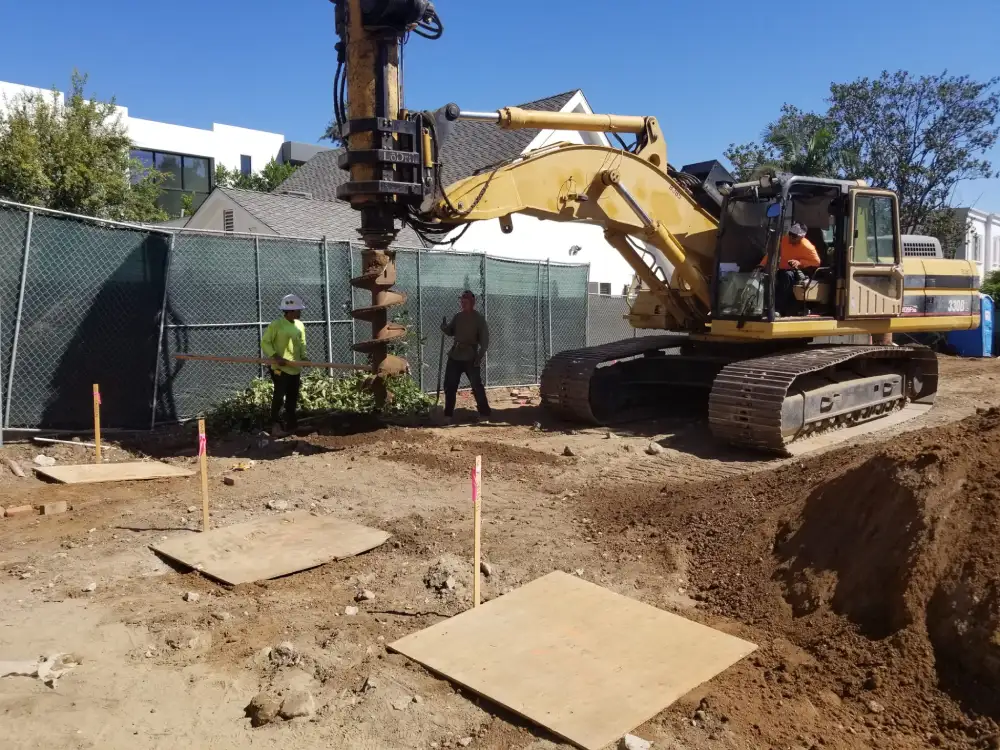
A seasoned foundation drilling contractor treats planning as seriously as the physical work, since it usually decides whether a project stays on schedule.
Site Review and Planning
Before any bore begins, an experienced drilling contractor works through a detailed review of the site and its constraints. That detailed review typically covers several key factors before drilling starts:
| Planning Factor | What It Determines |
| Site access | Whether standard or compact rigs can reach the work area |
| Subsurface information | Soil type, groundwater, and known obstructions below grade |
| Utility locations | Where gas, water, and electrical lines run through the site |
| Bore specifications | Required depth, diameter, and tolerance from the engineer’s plans |
| Scheduling | Sequencing drilling around other active trades on site |
Coordination with the property owner, engineer, and general contractor continues throughout this phase, since real-world conditions rarely match the plans perfectly on the first pass.
Fieldwork and Closeout
Fieldwork begins with mobilization, moving rigs, crews, and materials onto the site in the sequence the schedule calls for. Drilling then proceeds according to the approved bore specifications, with spoil management and quality checks happening continuously rather than only at the end.
Access, soil conditions, bore depth, and equipment selection all shape how a project unfolds once drilling starts. Closeout wraps up with site cleanup and the delivery of bore logs, depth records, and other documentation that the engineer of record needs on file.
How to Choose a Drilling Contractor in Los Angeles
Experience, credentials, safety practices, equipment, communication, and proposal detail all deserve a close look before you sign anything.
Qualifications and Safety
Confirming credentials should happen before a contract is signed, not after. California’s Contractors State License Board protects consumers by licensing and regulating the state’s construction industry and currently licenses about 290,000 contractors across 44 classifications statewide. Any construction job totaling $500 or more in combined labor and materials generally requires a licensed contractor under California law.
Beyond licensing, confirm insurance coverage, trained operators, and direct experience with conditions comparable to yours. A contractor who has drilled hillside lots across Los Angeles brings something a generalist crew simply cannot match.
Project and Site Fit
Licensing alone will not tell you whether a contractor is a good fit for your specific project. A few practical, side-by-side comparisons can help narrow the field quickly:
- Drilling method: Does their equipment match what your soil and load requirements call for
- Access capability: Can their rigs physically reach your site, especially on hillside or narrow lots
- Schedule fit: Does their availability align with your broader construction timeline
- Scope and exclusions: Does the proposal clearly state what is and is not included
- Concrete-related work: Will they coordinate directly with concrete or shoring crews, or hand that off entirely
Reviewing proposals side by side using these points usually surfaces the right fit faster than price alone ever could.
Ready to Talk Through Your Site?
Every Los Angeles drilling project brings its soil, access, and structural questions, and getting those answers early prevents costly surprises later on. Understanding what a drilling contractor actually does helps you hire well from the start.
Semper Drilling works through these exact details with property owners and general contractors every day, on straightforward bores and challenging hillside lots alike, and a conversation about your site conditions is a good place to begin.
Frequently Asked Questions
Can a Drilling Contractor Also Repair Concrete?
Some drilling contractors offer related concrete services alongside their core drilling work, while others focus solely on drilling. Always confirm directly whether repair, cutting, demolition, or restoration falls within a given contractor's scope before signing anything.
What Is the Difference Between a Drilling Contractor and a Drilling Consultant?
A contractor generally performs the physical fieldwork, operating rigs and crews on site to execute the approved plan directly. A consultant instead advises on planning, method selection, risk, or technical oversight, typically without operating drilling equipment.
How Much Does Drilling Work Cost in Los Angeles?
Cost depends on site access, soil conditions, drilling method, bore size and depth, equipment, mobilization, and permits. Because these factors vary so widely by site, an accurate estimate requires a direct project review rather than a general figure.
